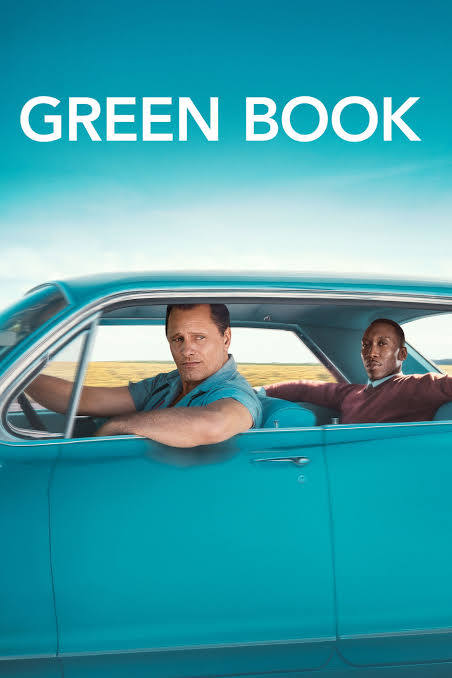
Frank Anthony "Tony Lip" Vallelonga was a real person, a bouncer at the Copacabana who genuinely did drive Don Shirley through the South in 1962. The broad strokes of the character are accurate: he was Italian-American, gregarious, not particularly cultured, and came from the Bronx. The film was co-written by his son Nick, drawing heavily on Tony's own letters and recollections, so the portrait is clearly affectionate and somewhat self-serving. His family insists the friendship with Shirley was genuine and lifelong. Shirley's family says the exact opposite, describing it as a strictly professional relationship that ended when Shirley fired him for insubordination. His famous nickname "Lip" reportedly came from his ability to talk his way out of anything, which tracks with how Mortensen plays him. The physical transformation in the film, Tony becoming a genuinely less racist person, is the part that is hardest to verify and most obviously shaped by whose version of events you believe.
Dr. Donald Walbridge Shirley was absolutely real, and his musical accomplishments were genuinely extraordinary. He studied at Catholic University of America, performed with the Boston Symphony at age 18, and lived for decades in a storied apartment above Carnegie Hall. His 1962 Southern tour with Tony Lip actually happened. Beyond that, the film's portrait of him gets murky fast. The movie depicts him as isolated from his family, alienated from Black culture, and essentially unaware of artists like Chubby Checker or Little Richard. His brother Maurice Shirley called these portrayals outright lies. According to Maurice, Don was close with all three of his brothers, attended the 1965 Selma to Montgomery march, had many Black friends and colleagues, and absolutely did not need a white man to teach him how to eat fried chicken. Maurice said Don was his best man at his wedding in 1964. The film's Don Shirley is a composite built almost entirely from one side of the story, by a screenwriter who never consulted the family of the man being depicted. Mahershala Ali's performance is widely considered exceptional. The character he's playing is another matter.
Dolores Vallelonga was Tony's real wife, and the letters Tony wrote to her during the tour are one of the few genuinely documented elements of the story. The Wrap reported that the filmmakers used actual letters Tony wrote to Dolores as source material. The film shows Don helping Tony compose increasingly eloquent letters to her, which is a dramatic embellishment of the real dynamic, but the letters themselves were real. Linda Cardellini plays her warmly and without much historical controversy. She was the one person in the main cast whose family was not disputing the depiction.
Don Shirley did hire Tony Lip as a driver for a tour through the American South in 1962, and that tour is the foundation the film is built on. Shirley undertook several Southern tours during the 1960s, believing, as his Wikipedia entry notes, that he could change some minds with his performances. The film's framing of Tony's role as part driver, part bodyguard is also accurate. Six years before their trip, Nat King Cole had been physically attacked on stage in Birmingham, Alabama. Having a large, intimidating presence in the driver's seat was not just logistical, it was a calculated safety decision.
The Green Book was absolutely real. Victor Hugo Green, a Harlem mail carrier, began publishing it in 1936 under the full title The Negro Motorist Green Book. It ran every year until 1966, when the Civil Rights Act made it technically obsolete. At its peak the guide listed over 10,000 businesses including hotels, restaurants, beauty parlors, and filling stations that would serve Black travelers without humiliation or danger. It also helped travelers identify sundown towns, places where Black people were legally prohibited from being after dark. The film underuses the guide as a concept. It names the book in its title and shows Tony carrying it, but does not really explore what the book represented or how desperately necessary it was. Critics noted this as a significant missed opportunity given the film is named after it.
This is the part the film gets most right. The pattern of being invited to perform for white audiences at exclusive venues, then being refused entry to the dining room, denied use of the bathroom, or turned away from the hotel where you are the evening's entertainment, is historically accurate and extensively documented. This was the daily reality of touring Black musicians in the Jim Crow South. Nick Vallelonga said his father told him it happened on an almost daily basis. The Birmingham country club scene, where Don is expected to play and then refused dinner in the same room as his audience, reflects a pattern that was completely standard at the time, not a dramatic invention.
The film's depiction of sundown towns, where Black travelers had to be out of city limits before dark or risk arrest or worse, is historically accurate. Researcher James Loewen, who wrote the definitive study on the subject, confirmed as much when fact-checkers consulted him for the film's release. Thousands of American towns across both the North and South maintained sundown policies well into the 1960s, some officially through local ordinance and some through the understood threat of violence. The scene where Tony and Don are pulled over late at night in Mississippi for simply being on the road after dark is exactly the kind of thing the Green Book was designed to help travelers avoid.
After Tony and Don are arrested in Mississippi, the film has Don place a call to Attorney General Robert F. Kennedy, who then pressures the local police into releasing them. Nick Vallelonga maintains this happened. Other accounts are less certain about whether the call went directly to Kennedy or to someone in his office. What seems reasonably documented is that someone with political connections intervened to get them released, and that the intervention came from the direction of the Kennedy Justice Department, which was aggressive about civil rights enforcement in a way previous administrations had not been. The film possibly compresses or dramatizes who picked up the phone.
This is the scene Don Shirley's family found most offensive, and they were very clear about it. Maurice Shirley stated flatly that no one ever had to teach his brother how to eat fried chicken, and that their father was an Episcopal priest from Jamaica, their family had lived in the American South, and Don absolutely grew up with Southern food. The scene is designed to depict Don as so alienated from everyday Black culture that he has never eaten a piece of fried chicken with his hands, and Tony Lip has to show him how. The Shirley family's reaction to it was not ambiguous. Maurice said something along the lines of: of course he knew how to eat fried chicken. The film uses this moment to cement its core argument that Don is cut off from his own community and that Tony is the one who reconnects him. That argument is itself disputed.
The film has Tony introducing Don to Little Richard and Chubby Checker on the radio, with Don apparently hearing their music for the first time. Don Shirley was a professional musician who had spent his entire career inside the music industry. He performed with Duke Ellington at Carnegie Hall in 1955. He performed at major venues across the country. The idea that a working musician in 1962 was unfamiliar with some of the biggest names in American popular music is difficult to take seriously, and Don's family did not take it seriously. This scene, like the fried chicken scene, is built around the film's recurring premise that Don has become so isolated by his classical training and upward mobility that he has lost touch with his own culture. His family disputed the premise entirely.
The film depicts Don as essentially cut off from his siblings, and uses Tony encouraging Don to reconnect with his estranged brother as one of the emotional climaxes of the story. This was the claim that upset Maurice Shirley the most. He said he and Don spoke regularly, that Don attended important events in Maurice's children's lives, and that Maurice was Don's best man when he married in 1964. He said they had two other brothers who were also present at the wedding. He also directly stated that Don's ashes are in his home, by Don's own wishes. The estrangement storyline is apparently invented, or at the very least a massive distortion of the actual relationship.
The film presents the core of the story as a genuine, deep, and lasting friendship that began on this tour. The Vallelonga family absolutely stands by this. Nick Vallelonga says his father and Don remained friends for decades after, and that as a child he visited Don at his Carnegie Hall apartment. The Shirley family says something very different. Maurice said it was an employer-employee relationship, that Don fired Tony when he refused to behave professionally as a chauffeur, and that he did not consider Tony a friend. Both Tony and Don died within the same week in April 2013, so neither can clarify. What seems beyond dispute is that the tour happened, that both men came through it with enough of an impression on each other that Tony's son spent years trying to turn it into a film, and that Don gave Nick his blessing to tell the story, but only after Don himself had died. That last condition says something, though what exactly is open to interpretation.
The film presents the tour as an eight-week journey. Nick Vallelonga has said the real road trip lasted more than a year. Political fact-checkers who reported on the film also noted the dates and locations were altered. This is a fairly standard narrative compression for a biographical film, and does not distort the nature of what happened, but it does change the scale of the experience considerably. A year on the road with someone is a very different thing from eight weeks.
The film's depiction of what it meant to be a Black man traveling through the Deep South in 1962 is the thing it gets most reliably right. Segregation at restaurants, hotels, restrooms, and performance venues was not only legal but actively enforced. A wealthy, internationally acclaimed pianist could be told he was not permitted to use the same bathroom as the audience he had just performed for, and there was nothing he could legally do about it. The Civil Rights Act of 1964 was still two years away. The social and physical dangers that Don faced on a daily basis during this tour were completely real, and several critics noted that the film actually understates how terrifying those roads were for a Black man at night.
The film opens with Don living in a grand apartment above Carnegie Hall, surrounded by African art and formal furnishings. This is accurate. Don Shirley lived above Carnegie Hall for decades, in what was known as Carnegie Studios, a set of residential and studio spaces that occupied the upper floors of the building. Filmmaker Josef Astor, who made a documentary about those studios called Lost Bohemia, knew Shirley personally and described him as a recluse in his later years, though he acknowledged that family members would offer a very different characterization. The apartment itself is one of the most well-documented elements of Don's real life.
Tony Vallelonga did work at the Copacabana, one of New York City's most famous nightclubs, which operated at 10 East 60th Street in Manhattan. The Copacabana was a real place and Tony's connection to it is documented. The film's opening, with the club closed for renovations and Tony looking for temporary work, is plausible and fits the timeline, though the specific circumstances of how Tony came to meet Shirley involved references from people in the club world.
The film's most iconic visual is Tony and Don cruising through the South in a gleaming teal blue Cadillac. Maurice Shirley said this was not accurate. He told interviewers that his brother always used a black limousine, not a teal Cadillac. The Vallelonga family appears not to have disputed this particular detail. It is a small thing but the teal Cadillac is genuinely one of the film's central images, so it is worth noting it may have been invented or misremembered.
Victor Hugo Green was a Harlem mailman. The creator of the Green Book that gives the film its title was not a publisher or an activist organization. He was Victor Hugo Green, a postal carrier from Harlem who started putting together a list of Black-friendly businesses in 1936 because he was tired of the humiliation and danger Black travelers faced. His wife Alma helped him. They ran it out of their home at first. It grew to list over 10,000 businesses across the United States before the Civil Rights Act made it theoretically unnecessary in 1966.
Both men died within days of each other in 2013. Don Shirley died on April 6, 2013. Tony Lip had died on January 4, 2013, just three months earlier. They never got to see the film that would be made about them. Nick Vallelonga said he had gotten Don's permission to tell the story, but Don had one condition: Nick could only make it after Don was gone. Nick kept his word.
Viggo Mortensen gained 40 to 50 pounds for the role. Mortensen put on substantial weight to match Tony Lip's physique. He has done significant physical transformations before, including learning to ride horses for the Lord of the Rings, but this was reportedly one of the more extreme changes he has undergone for a role. He was nominated for Best Actor at the Academy Awards.
Mahershala Ali won his second Oscar for this film. Ali had already won Best Supporting Actor for Moonlight in 2017. Green Book gave him his second, also for Best Supporting Actor, making him one of a very small group of actors to win in the same category twice. The performances were almost completely opposite: quiet and shattered in Moonlight, composed and regal in Green Book.
Igor Stravinsky called Don Shirley's playing worthy of the gods. Don Shirley was not some obscure regional performer. He performed with the Boston Symphony at age 18 and with the London Philharmonic the following year. He appeared at Carnegie Hall with Duke Ellington in 1955. He was a finalist for a Rhodes Scholarship in 1949. The film is sometimes criticized for reducing him to a symbol rather than engaging with how genuinely extraordinary his story was before Tony Lip ever showed up.
Peter Farrelly is the director of Dumb and Dumber. Green Book was Peter Farrelly's first dramatic film. Before this he was known almost exclusively for broad comedies like Dumb and Dumber, There's Something About Mary, and Shallow Hal, often made alongside his brother Bobby. This was his solo directorial debut as a drama. It won Best Picture. Opinions on whether that was the right call vary wildly depending on who you ask.
The script was written almost entirely from one side of the story. Nick Vallelonga co-wrote the screenplay based on his father's recollections and the letters Tony sent to Dolores. Don Shirley gave his blessing for the project, but the filmmakers never consulted Don's family, never spoke to his brothers, and never sought out people from his side of the relationship. Maurice Shirley found out about the film when it was already in production. This is the structural reason so much of the characterization is disputed: the story was built from one perspective and presented as a mutual truth.
Nat King Cole being attacked on stage is real, and it matters. In 1956, Nat King Cole was performing at the Municipal Auditorium in Birmingham, Alabama, when a group of white men rushed the stage and attacked him mid-performance. He was knocked to the ground. The audience, which was white, applauded when he returned to finish his set. This incident was widely known among touring Black musicians and is a direct part of the context for why Don Shirley wanted a physically imposing white man in the driver's seat when he toured the South six years later.